Outdoor Audio · November 2, 2026 · 8 min read
Weatherproof Outdoor Speakers Still Need Protection From Desert Exposure
Weatherproof outdoor speakers need more than a rain-resistant label in Arizona. Check UV stability, temperature limits, drainage and service access.
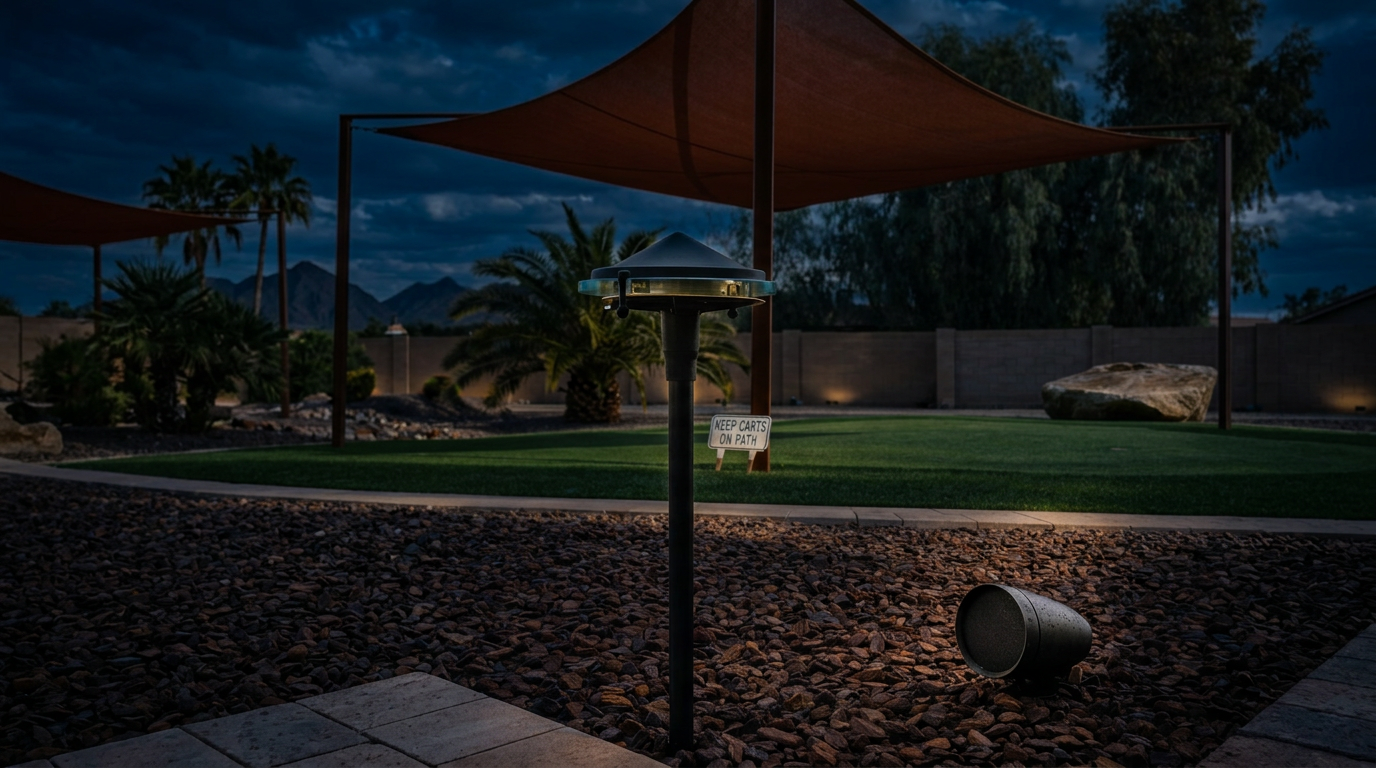
Weatherproof outdoor speakers are not automatically suitable for permanent desert exposure. The label needs to be backed by installation instructions covering water, sunlight, temperature and the way the speaker will be mounted. A cabinet that handles an afternoon shower can still suffer beside a sprinkler that wets it every morning, or against a west-facing wall that stays hot after sunset. For a permanent outdoor audio system, judge the complete installed assembly, including its bracket, cable entry and connections, rather than the enclosure alone.
What Weatherproof Outdoor Speakers Must Be Rated To Handle
Start with the manufacturer's intended use, not the largest word on the carton. A portable speaker designed for occasional poolside use is a different product from a passive landscape satellite designed to remain in a planting bed. Covered outdoor use, exposed outdoor use and direct burial are also different permissions. A product suitable under an eave does not become suitable below grade because its cabinet looks sealed.
An IP rating describes particular ingress tests, not an unlimited promise. For example, IP65 identifies a dust-tight enclosure tested against water jets, while IP67 includes a specified temporary immersion test. An immersion rating alone does not establish resistance to every form of spray, cleaning pressure or continuous flooding, and an X means that category is not specified by the rating. Read the conditions attached to the exact model rather than treating a higher-looking number as permission for any location.
Water ingress is only one part of the specification. Ask separately about UV exposure, operating temperature, mounting orientation and acceptable cleaning products. Save the installation manual with the model number and warranty documents. A photograph in our project gallery shows how discreet the finished equipment can be, but it cannot show whether a hidden cable entry has the protection that installation requires.
- Confirm whether the model permits covered, fully exposed or buried installation.
- Read the conditions behind the stated ingress rating.
- Check temperature limits, sunlight exposure and required mounting orientation.
Sunlight Attacks Materials Before The Sound Changes
UV exposure shows up first as chalking, fading and brittle plastic around thin edges. A grille can still look acceptable from the patio while its retaining tabs have lost flexibility. On properties in Scottsdale, assess the proposed position in afternoon sun as well as at the evening listening hour. A planting bed shaded by a roof at noon can be fully exposed by late afternoon.
UV-stabilized polymers and outdoor-rated composite housings belong on the shortlist, but material names alone do not settle durability. Painted metal relies on its finish, especially at scratches and fastener holes. Stainless hardware also needs the appropriate grade and compatibility with adjacent metals; the word stainless does not make every screw immune to staining or corrosion. Check the enclosure, grille, bracket and fasteners as a group.
Shade can reduce exposure without hiding the speaker behind foliage. The trade-off is acoustic: a dense shrub in front of the grille can dull vocals even while protecting the cabinet from sun. Keep the listening face open and leave room for growth. Do not build a decorative box around the speaker unless the manufacturer permits it, since trapped heat and a restricted sound path can create new problems.
Heat Limits Apply To The Equipment Location
The published operating range refers to stated conditions, usually ambient air, not permission to place a product against any hot surface. Sun-warmed stucco, metal brackets and a dark enclosure can create a harsher environment than the shaded air nearby. Ask the installer to compare the expected location with the manufacturer's range and clearances. A temperature limit without a placement decision is an unfinished specification.
Passive speakers and powered speakers put different equipment outdoors. A passive satellite leaves the power amplifier elsewhere; a powered model carries electronics in its own enclosure. Neither arrangement eliminates heat concerns, but it changes which parts need ventilation and service access. For a permanently installed landscape system, evaluate the amplifier location separately from the speakers instead of assuming that outdoor-rated satellites make the whole system weather resistant.
An amplifier cabinet needs the airflow required by its manufacturer, not just a weather-resistant door. Shelving that crowds its vents, a cabinet in full afternoon sun and an unrelated power supply stacked on top all work against cooling. Leave access for cleaning filters where fitted and inspecting cable entries. If protection circuits operate during hot afternoons, stop using the system and have the equipment location, loads and ventilation checked rather than repeatedly restarting it.
Irrigation And Runoff Are Different From Rain
Rain is intermittent. An irrigation head can wet the same grille and cable entry every cycle, leaving mineral residue as the water evaporates. Drip systems create a different problem when an emitter ends up beside a speaker stake or above a buried connection. Watch a complete watering cycle before approving the final position. A dry bed during installation says little about where the water goes at sunrise.
Place equipment away from direct discharge where the listening layout allows, and have irrigation adjustments made without sacrificing plant coverage. Runoff matters as much as spray: a shallow low spot beside a patio can hold water after a storm even though the surrounding decomposed granite looks dry. A buried subwoofer needs the model's specified installation depth, vent height and drainage conditions. A handful of gravel does not guarantee drainage through caliche.
Pool splash, salt residue and cleaning chemicals add exposure that an ordinary rain test does not describe. Use hardware approved for the intended setting and follow its maintenance instructions. Our poolside speaker placement guide covers the listening layout around decking; weather resistance belongs in that same decision, rather than being used to justify placing equipment wherever water is most convenient to ignore.
- Observe irrigation while it is running, including drip emitters near equipment.
- Identify runoff paths and standing-water pockets before setting stakes.
- Follow model-specific drainage and exposure instructions for buried equipment.
A Protected Cabinet Cannot Rescue An Exposed Connection
Water can enter a system at the connection even when the speaker cabinet stays intact. Select connector assemblies rated for the actual environment, cable size and conductor count, and follow their preparation instructions. Gel or sealant is not a universal repair for the wrong connector. A splice wrapped in tape or tucked inside a landscape valve box has not automatically become suitable for underground exposure.
Cable entries need strain relief and the orientation specified by the equipment maker. A cable pulled tight against a stake transfers movement into the joint when landscaping crews bump the speaker. Leave the protected service allowance called for by the installation, with a recorded connection location, so a technician can inspect it without tugging on buried cable. Keep excess wire out of mower, rake and edging traffic.
The speaker wiring guide explains cable ratings and documentation in more depth. For hardware selection, the practical question is whether every part between amplifier and speaker is suitable for its exposure. An outdoor cabinet connected with indoor cable or an unsuitable splice is still a vulnerable assembly, regardless of the rating printed on the grille.
Clean Dust Without Driving It Into The Speaker
After a dust storm, inspect before cleaning. Look for debris across the grille, a shifted stake, blocked drainage openings and mineral marks showing repeated spray. Compare sound at the usual listening setting before changing any controls. One dull speaker beside several clear ones calls for inspection of that speaker and its connection, not a blanket increase in treble across the yard.
Use the manufacturer's cleaning method. A soft brush or damp cloth is often the starting point, while pressure washing and strong solvents can damage finishes, seals or grille coatings. Do not push a brush through a grille onto a driver, and do not remove protective parts merely to make cleaning faster. If rinsing is permitted, follow the stated pressure and direction limits rather than borrowing the deck-cleaning nozzle.
Arrange checks around the property's exposure: after major storms, after irrigation changes and when planting or hardscape work occurs near the equipment. More frequent inspection is useful where mineral residue returns quickly, but the lasting correction is reducing repeated discharge onto the speaker. Keep a record of model numbers and replaced parts so the next service visit does not start by guessing what is installed.
Specify The Whole Assembly Before Ordering
A useful proposal identifies the speaker model, mounting method, exposure suitability and the amplifier's location. It should also explain how connections are protected, what remains accessible and what the owner must maintain. Ask what happens if a grille, bracket or driver fails: replaceable parts and clear warranty terms matter more than a vague promise that the equipment is built for outdoors.
Do not pay for a higher ingress rating without resolving the rest of the installation. For outdoor audio, the better specification ties the hardware to the actual bed, wall or covered patio where it will live. If you are comparing proposals or replacing deteriorated speakers, request a consultation with photographs of the equipment and nearby irrigation. The aim is equipment that fits the exposure and stays serviceable, not a tougher label on the same avoidable problem.
Frequently Asked Questions
Planning A Project?
We walk the property in daylight, come back after dark, and design the system around what your home needs.
Continue Reading
Outdoor Audio · 9 min read
Poolside Speakers: Where They Go and Why Placement Decides Everything
Planning & Design · 8 min read
Outdoor Speaker Wiring: What To Set Before The Pavers Go Down
Outdoor Audio · 8 min read