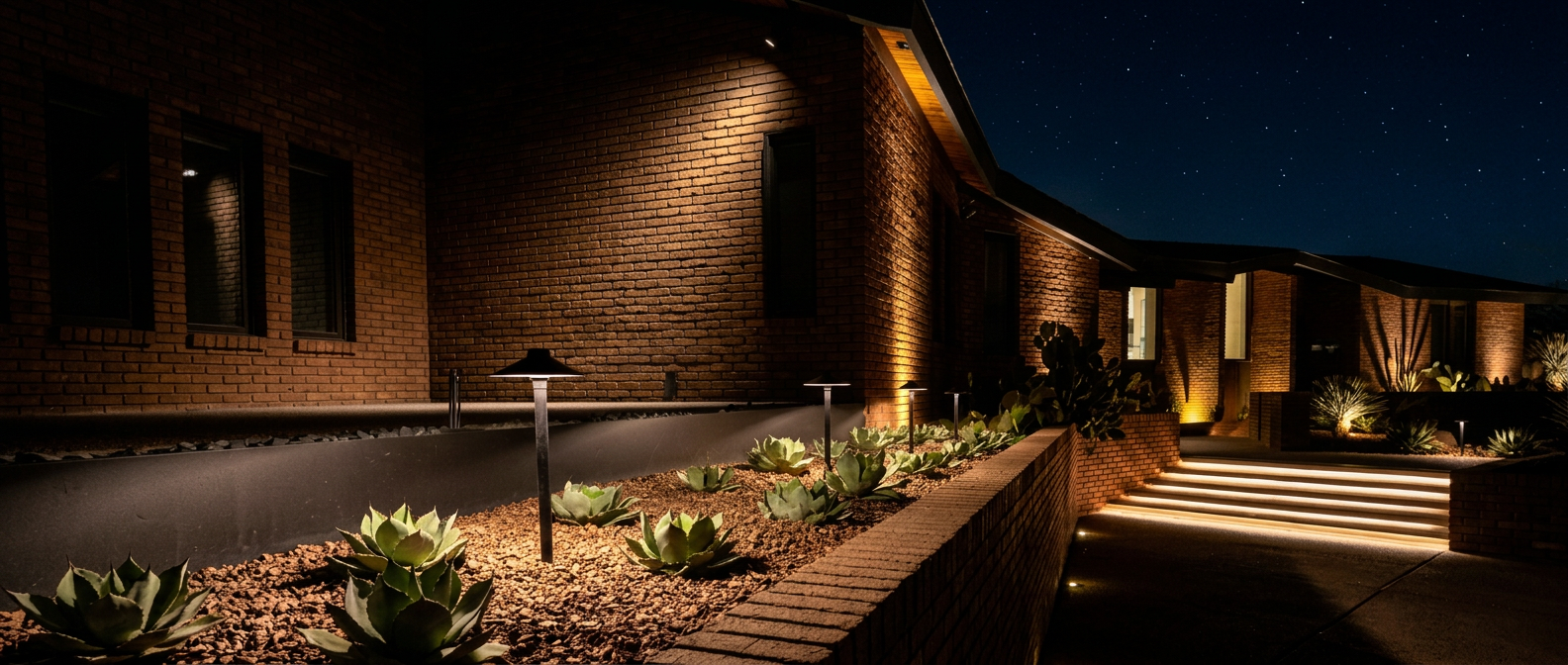
Outdoor Audio · June 30, 2026 · 8 min read
Outdoor Audio That Disappears: Designing Landscape Sound for Arizona Backyards
Even coverage, a buried subwoofer and honest tuning matter more than speaker count. Here is how a landscape audio system is designed for a desert backyard.
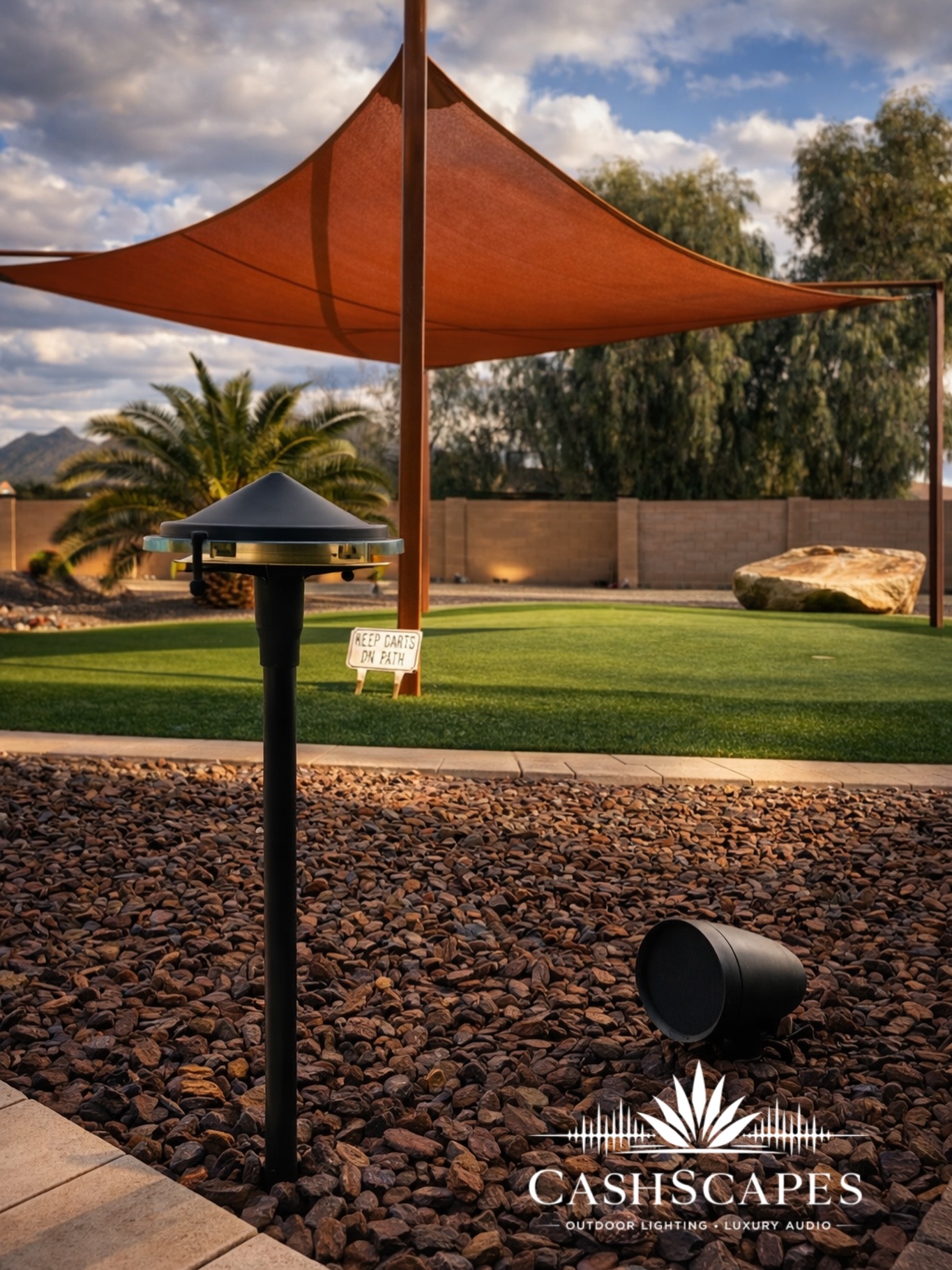
Most outdoor audio fails the same way: two loud speakers bolted to a wall, blasting the patio and reaching nothing beyond it. A designed outdoor audio system does the opposite. Many small sources, spread through the landscape, running quietly, so the sound is even everywhere and never seems to come from a box. This is how we plan them for backyards in Chandler, Gilbert and across the Valley.
Why Wall Mounted Speakers Fall Short
Sound drops off quickly with distance outdoors, and there are no walls or ceilings to reflect it back. A pair of speakers on the house has to be loud at the source to be audible at the far end of the yard.
That is why the patio ends up too loud for conversation while the pool end hears almost nothing, and why the neighbors hear more than they should. The problem is not speaker quality, it is distribution.
The Distributed Approach
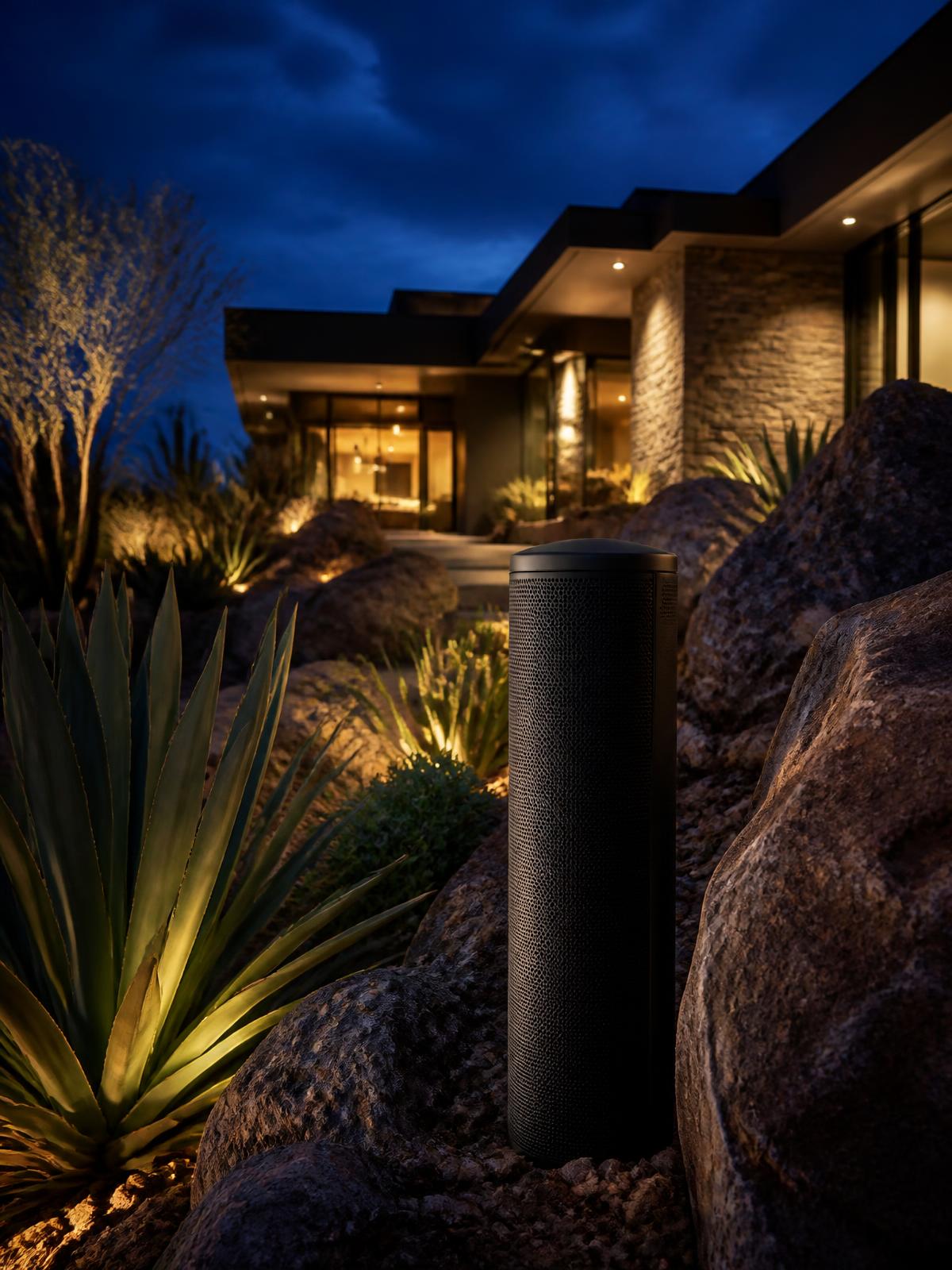
A landscape system replaces two loud sources with six, eight or more small satellites placed through the planting beds, plus one or more buried subwoofers.
Each satellite runs at a low, comfortable level. Because they are spaced evenly, volume stays consistent as you walk the yard, and nobody has to shout over a nearby speaker.
- Satellites spaced evenly through beds, not clustered at the house
- Buried subwoofer for low frequency that fills without locating
- Volume set low at each source for even coverage
- Speaker bodies hidden behind plant material and rock
What A Buried Subwoofer Actually Does
Low frequency is what makes outdoor audio sound full rather than thin. Small satellites cannot reproduce it, and adding more of them will not fix it.
A subwoofer buried in the landscape with only a small vent visible supplies that foundation. Because low frequencies are non directional, you feel it without being able to point at it, which is exactly the effect a good system aims for.
Zoning The Yard
A front courtyard, a pool deck and a ramada are different rooms with different uses. Each should have independent volume, and often independent sources.
On larger properties in Paradise Valley or Queen Creek, we frequently run four or more zones so the pool can carry a party while the patio stays at conversation level.
Heat, Dust And Irrigation
Arizona is unusually hard on outdoor electronics. Summer heat, monsoon dust and daily irrigation contact will destroy indoor grade hardware quickly.
We specify weather rated enclosures, UV stable materials, sealed connections and amplifiers installed in ventilated, shaded locations. This is the same discipline we apply to landscape lighting hardware, and for the same reason.
Wiring Done Once
Cable paths should be coordinated before hardscape closes access, with separate sleeves where the equipment and electrical requirements call for them. Our guide to outdoor speaker wiring before hardscape explains cable ratings, amplifier loads and the records that make a buried system serviceable.
Gauge matters here as well. Long runs at low impedance lose power, so we size for the distance rather than defaulting to whatever is on the truck.
Control And Sources
Most clients want one thing: open a phone, pick a zone, play music. Streaming platforms, a matrix amplifier and clean zone naming deliver that without a learning curve.
For homes with a broader automation system, outdoor audio can join lighting scenes so a single evening setting brings both up together. That integration is common on projects shared with Cashwood Innovations.
Tuning After Installation
A system is not finished when the last speaker is buried. We walk the property with music playing and adjust levels zone by zone until the volume is genuinely even from the back door to the far wall.
We also check the property line. Good outdoor audio is nearly inaudible from the street, because no single speaker is working hard.
Pairing Audio With Lighting
The best outdoor spaces get both at once. Lighting sets the mood and makes the yard usable after dark, and audio fills the space so it feels like a room rather than a lawn.
Installing them together also saves real money, since one trenching pass carries both. Pool decks need their own approach, covered in poolside speaker placement. See finished examples in the gallery, or start a plan on the contact page.
Frequently Asked Questions
Planning A Project?
We walk the property in daylight, come back after dark, and design the system around what your home actually needs.
Continue Reading
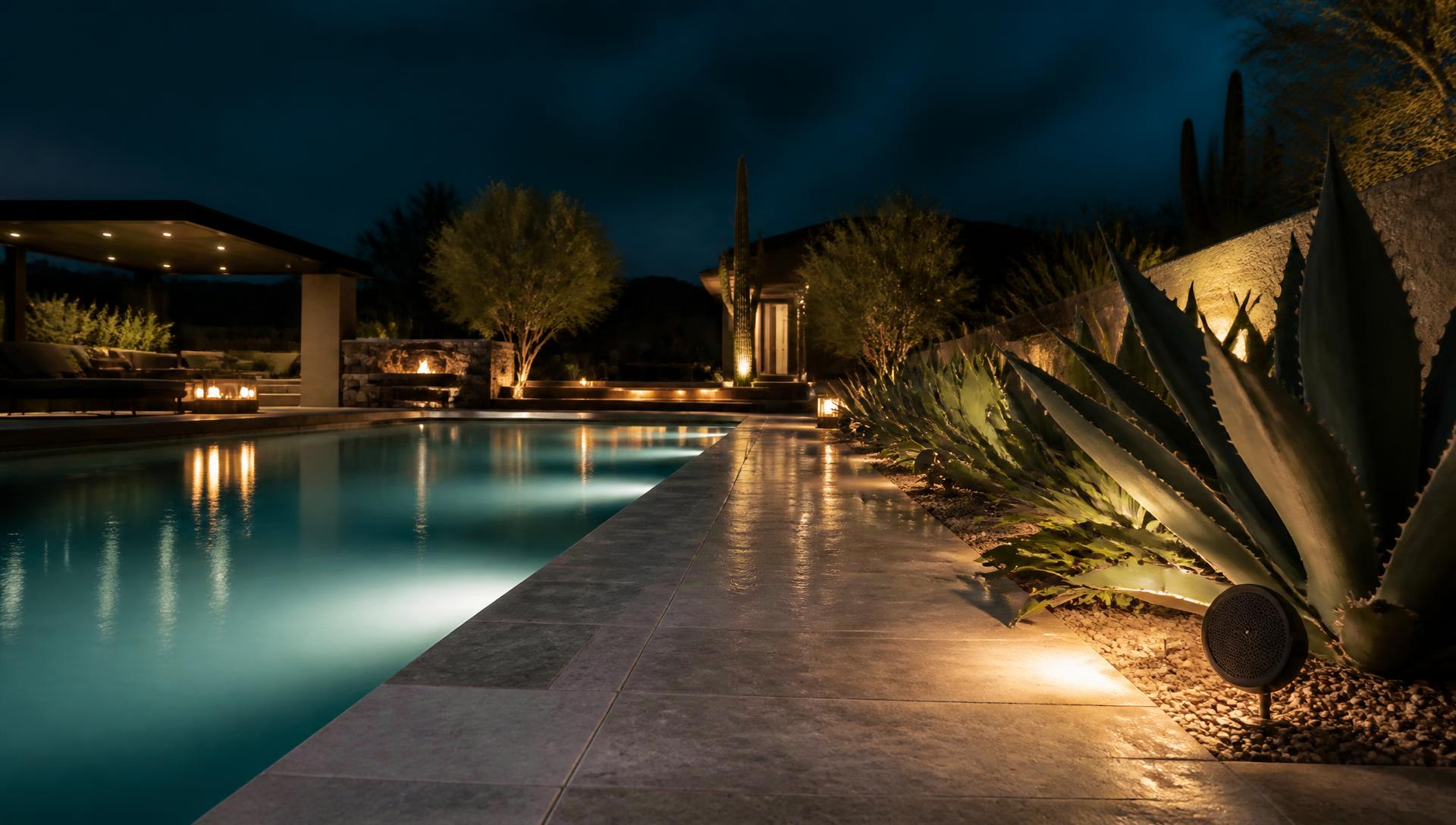
Outdoor Audio · 9 min read
Poolside Speakers: Where They Go and Why Placement Decides Everything
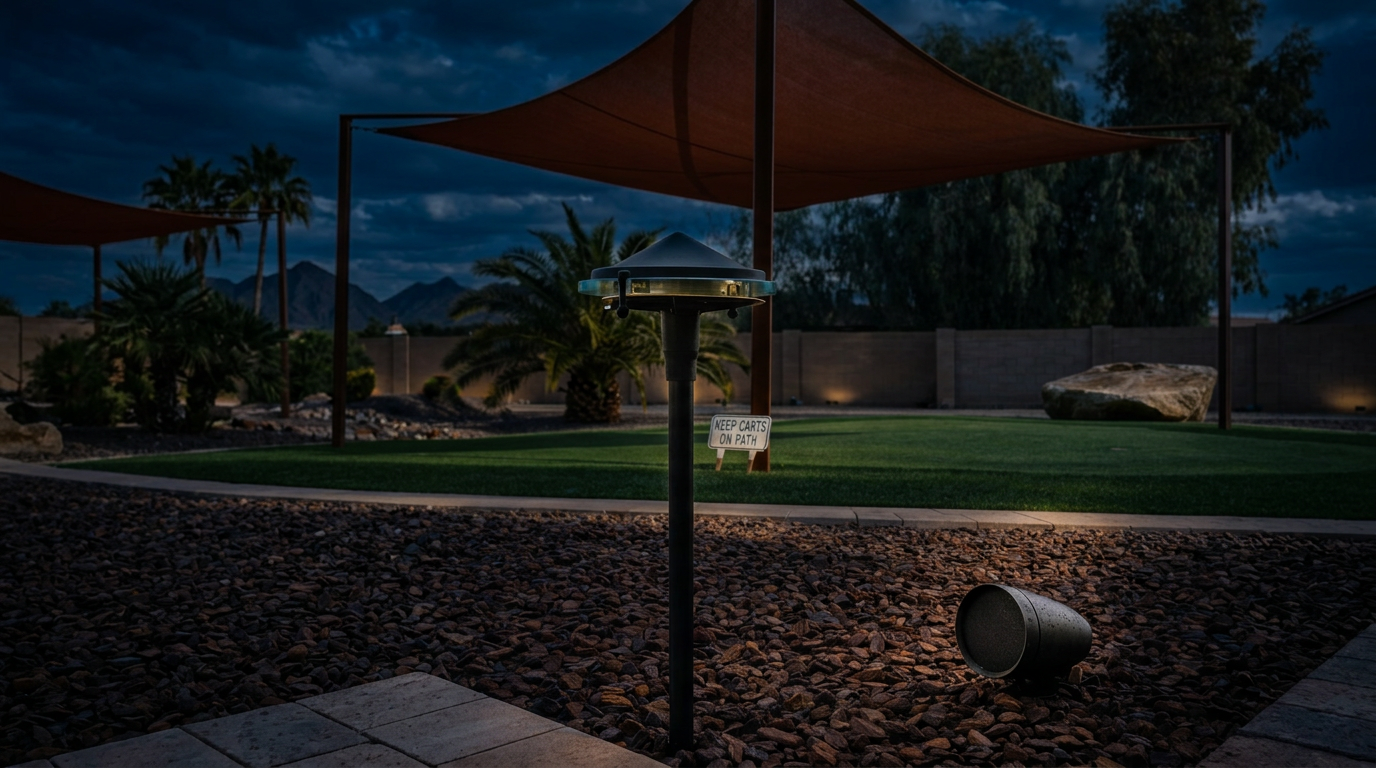
Planning & Design · 8 min read
Outdoor Speaker Wiring: What To Set Before The Pavers Go Down
Outdoor Audio · 9 min read