Planning & Design · June 16, 2026 · 8 min read
Low Voltage Lighting Maintenance in the Desert: What Actually Fails
Connections, gravel migration, transformer load and aiming drift cause most outdoor lighting failures in Arizona. Most of it is fixable without a new system.
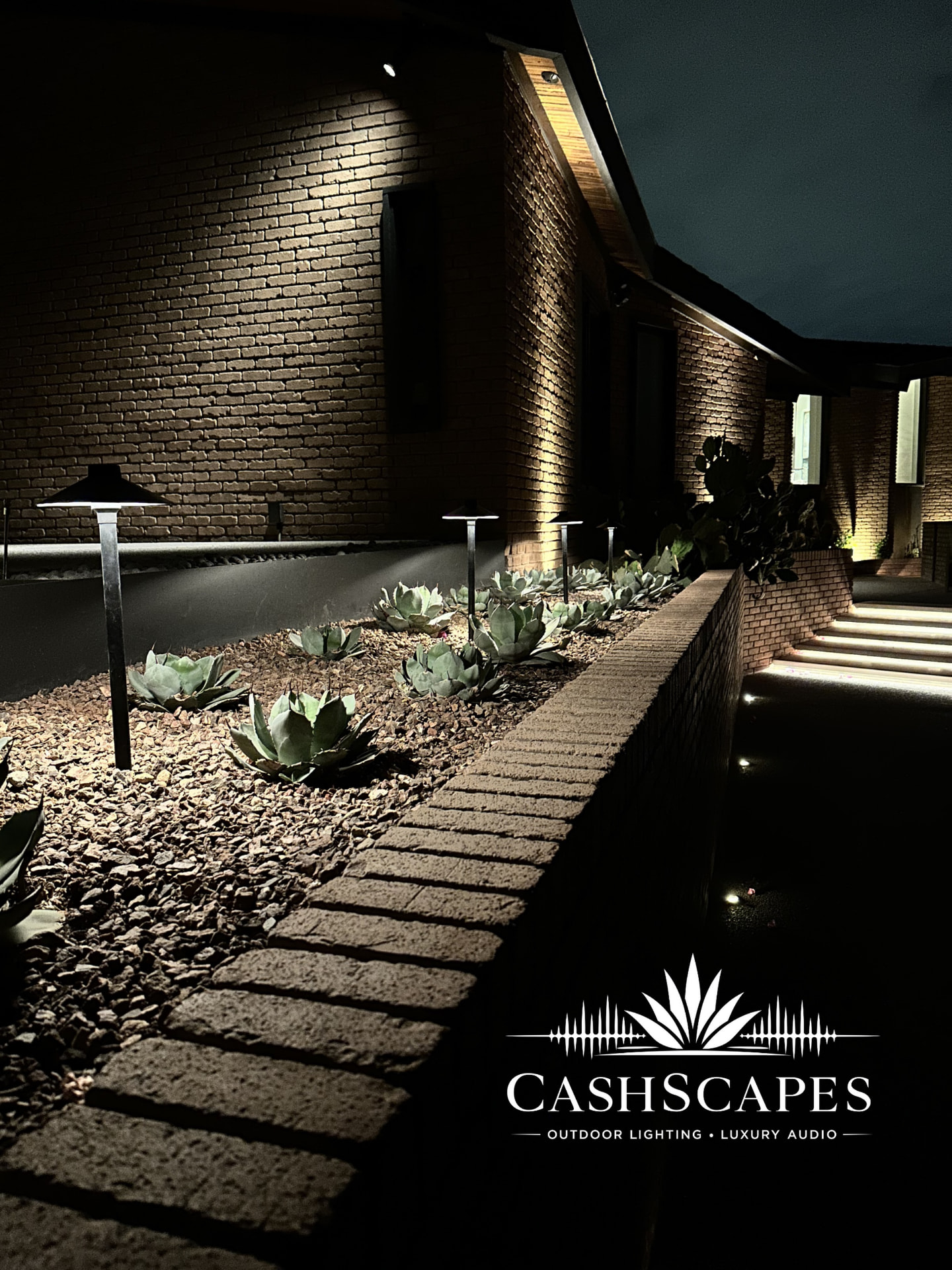
When a homeowner calls us because half the yard is dark, the system is usually not dead. Low voltage lighting fails in a handful of predictable ways in this climate, and most of them are repairs rather than replacements. This is what actually goes wrong on landscape lighting systems across Mesa, Tempe and the rest of the Valley, and how to tell the difference between a service call and a rebuild.
Connections Fail Before Fixtures Do
The most common failure point is the wire connection, not the light. Twist on connectors and unsealed splices corrode in soil that sees irrigation and mineral heavy water, and resistance climbs until the fixture dims and dies.
Properly sealed, gel filled, direct burial connections solve this permanently. When we service an older system, replacing connections often brings back most of the dark fixtures.
Gravel Migration And Buried Fixtures
Decomposed granite moves. Over a few seasons it creeps into well lights and up around the base of uplights until the fixture is half buried and throwing a dim smear into the rock.
This is a five minute correction per fixture and it is the single most common reason a system looks worse than it did the year it was installed.
Aiming Drift
Plants grow, irrigation shifts soil, and landscape crews bump fixtures with blowers and rakes. Aiming drifts a few degrees at a time until a light that once grazed a wall is pointing at a bush.
Annual re aiming after dark restores the original design. It is the highest impact maintenance item we perform and it costs almost nothing relative to the value of the system.
- Re aim every fixture after dark once a year
- Clear gravel and debris from in ground housings
- Clean lenses to remove hard water film and dust
- Trim plant growth blocking beam paths
Transformer Load And Heat
A transformer running at or near capacity in a Phoenix summer will not last. Add fixtures to an existing system without checking load and the transformer becomes the next thing to fail.
We check total wattage against transformer rating and look at where the unit is mounted. Full afternoon sun on a west wall shortens its life considerably compared to a shaded location.
Voltage Drop On Long Runs
If the fixtures nearest the transformer are bright and the far ones look weak and slightly warmer in color, the cause is usually voltage drop from undersized wire or an overloaded run.
The repair is either heavier gauge wire, a rebalanced tap, or a second transformer closer to the far end. On acreage properties in Queen Creek and Buckeye, multiple transformers are the normal answer rather than the exception.
Hard Water And Lens Film
Valley water leaves mineral deposits on any lens caught by an irrigation head or sprinkler overspray. A filmed lens can cut light output noticeably.
Cleaning is simple, but the better fix is repositioning the fixture or adjusting the irrigation head so it stops happening every cycle.
Failing Cheap Fixtures
Aluminum fixtures with painted finishes corrode where the coating is scratched, and integrated LED modules that cannot be replaced turn a small failure into a full fixture replacement.
When we evaluate an older system, we often keep the wire and transformer and swap the fixtures to brass. That preserves the buried investment and fixes the part that was always going to fail.
Timers, Photocells And Scheduling
A system that comes on late in December or runs into the morning usually has a timer that was set once and never adjusted for the seasons.
An astronomic timer follows sunset automatically all year. It is inexpensive, and it removes the most annoying maintenance chore a homeowner deals with.
When Replacement Is The Right Call
Replacement makes sense when the wire is undersized throughout, the fixtures are corroded aluminum, and the layout never worked in the first place. In that case you are paying to maintain a design that will never look right.
Short of that, service is almost always the better value. If you have an existing system you are unhappy with, we will evaluate it honestly, and you can start on the contact page or read about our service areas.
Frequently Asked Questions
Planning A Project?
We walk the property in daylight, come back after dark, and design the system around what your home actually needs.
Continue Reading

Planning & Design · 8 min read
What Landscape Lighting Costs in Scottsdale, and What Drives the Price
Outdoor Audio · 8 min read