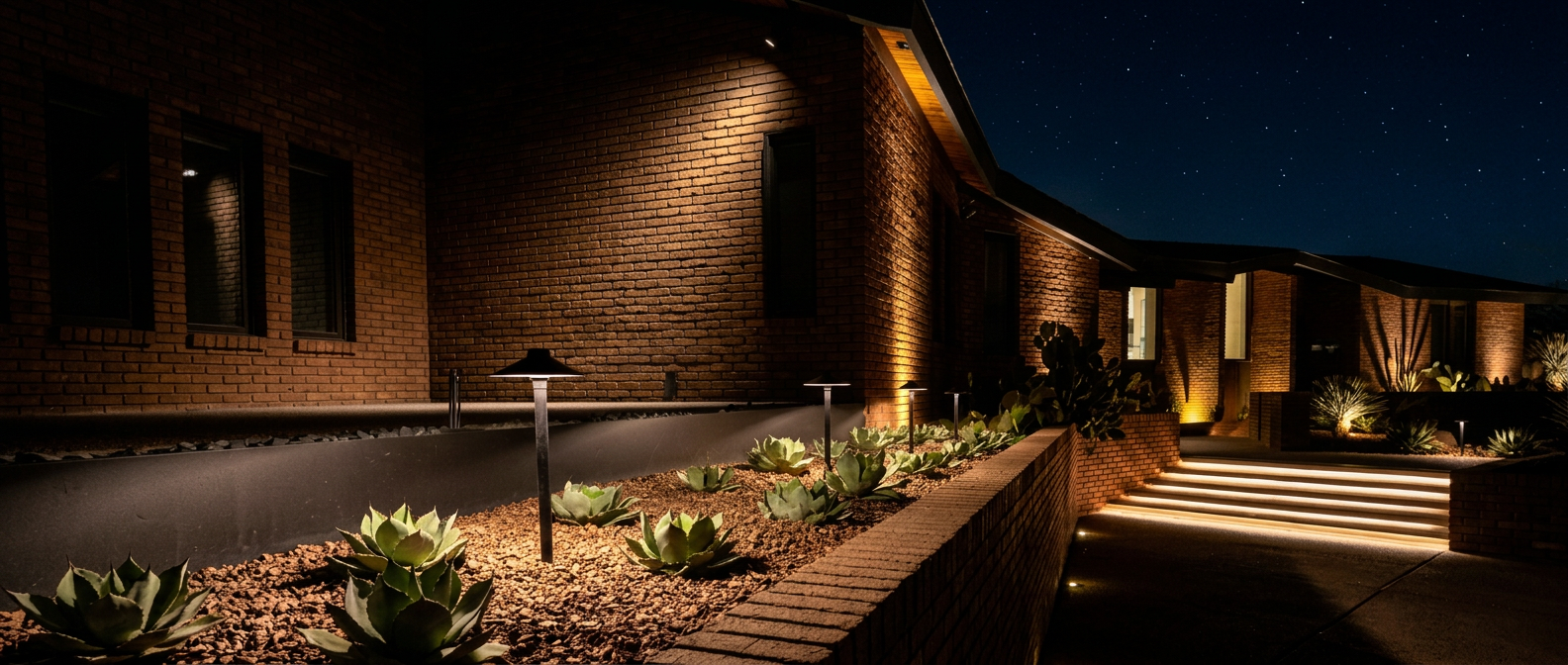
Landscape Lighting · July 29, 2026 · 8 min read
Dark Sky Lighting Rules in Scottsdale and Paradise Valley
Shielding, color temperature and uplighting limits shape what a compliant luxury lighting design looks like in the Valley. Here is how to design inside the rules.
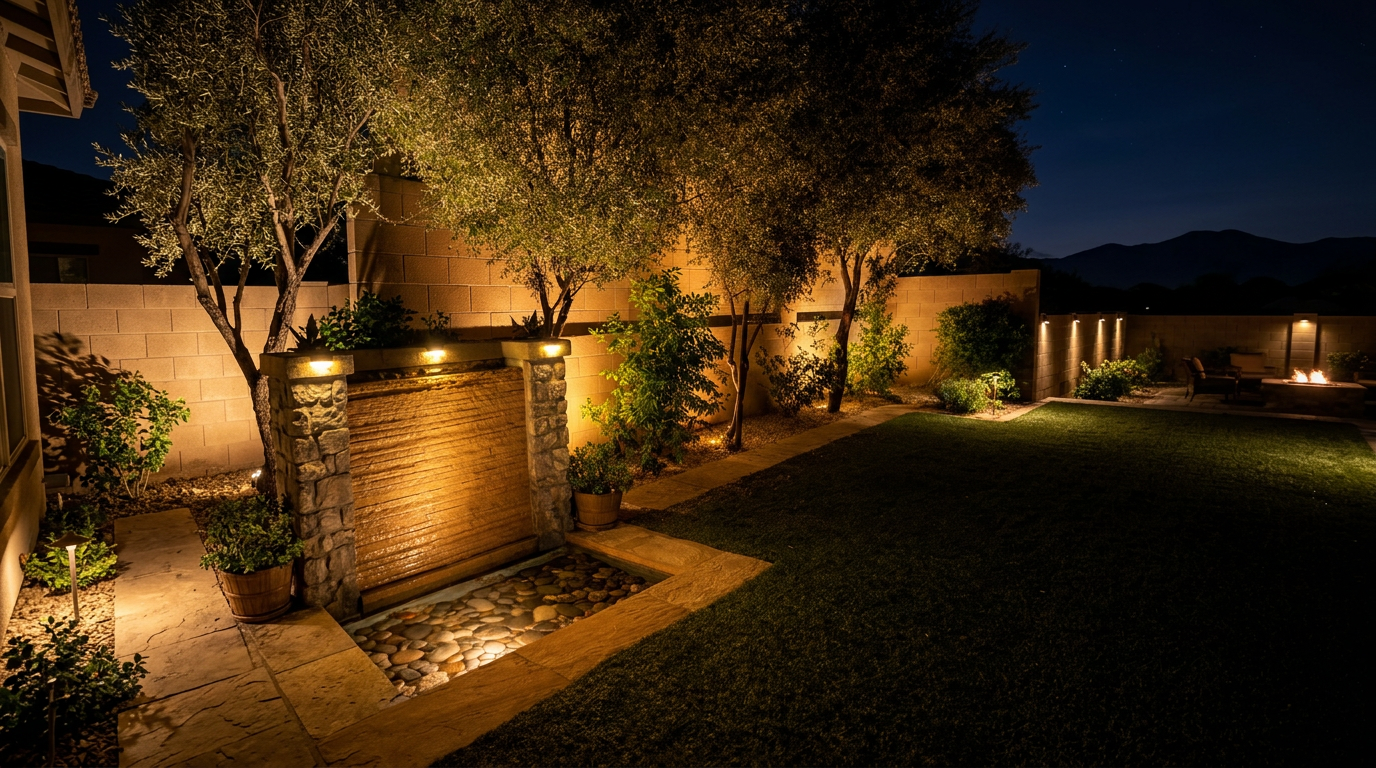
The Valley takes outdoor lighting seriously, and the communities with the highest end homes are usually the strictest. Before a landscape lighting design goes to installation in Scottsdale, Paradise Valley or Cave Creek, it has to satisfy the municipal code and, in most cases, an HOA design review. The good news is that the rules and good design point in the same direction.
Why The Rules Exist Here
Arizona hosts some of the most productive astronomy in the world, and local ordinances across the state reflect that. Municipal codes address shielding, total lumen output, color temperature and how much light is allowed to cross a property line.
Beyond astronomy, the rules protect what people moved here for. A dark desert night with a lit saguaro and a mountain silhouette is the point. Flood lighting erases it.
Verify Before You Design, Not After
Codes change, and HOA standards are often stricter than the city standard. Confirm current requirements with your municipality and your association before design sign off rather than after fixtures are ordered.
On projects with architects, we typically supply a fixture schedule and layout that can be submitted directly to design review, which shortens the approval cycle considerably.
Shielding And Full Cutoff Fixtures
The core requirement in most Valley codes is that the light source is not directly visible from off the property. Full cutoff and shielded fixtures put light on the surface you intend to light and nowhere else.
Shielding is not a compromise. A visible bulb creates glare that flattens everything around it. Hide the source and the eye reads the illuminated surface instead of the fixture.
Color Temperature Choices
Warm color temperature between 2200K and 2700K suits desert materials, keeps saguaro flesh and flagstone reading naturally, and generally sits well inside local expectations.
Cooler light above 3000K looks harsh against adobe, slump block and desert plants, scatters more in the atmosphere, and is restricted in some jurisdictions. There is rarely a design reason to use it outdoors here.
Uplighting Within The Rules
Uplighting is not universally banned, but it is regulated. The practical approach is tight beam optics, low output lamps, careful aiming and shrouds or louvers that stop spill above the plant canopy.
A well aimed uplight puts nearly all of its output on the trunk and canopy of the tree. If you can see the beam continuing into the sky above the plant, the fixture is either too powerful, too wide or aimed wrong.
- Use the narrowest beam that covers the subject
- Add shrouds and glare guards on any fixture near a sight line
- Aim so the beam terminates in plant material or architecture
- Choose lower lumen fixtures and add depth with layering instead of power
Light Trespass And Neighbors
Most codes limit how much light may cross the property line, and most neighbor complaints come from one or two badly aimed fixtures rather than the system as a whole.
On the large lots common in Paradise Valley and North Peoria, we walk the perimeter after dark during commissioning specifically to check what the system looks like from the street and from adjacent properties.
Curfews, Timers And Zoning
Some communities require decorative lighting to shut down or step back at a set hour. Zoned control makes that painless: safety lighting on paths and stairs can stay on while accent lighting dims or turns off.
An astronomic timer handles seasonal sunset shift automatically, so the system never runs during daylight and never leaves you walking into a dark entry in December.
What Compliant Design Looks Like Finished
Compliant lighting is not dimmer lighting. It is more disciplined lighting. Layers of low output light with strong contrast look richer than a small number of bright fixtures fighting each other.
You can see the difference across our gallery. Nearly every photo there is a shielded, warm, tightly aimed system, and the reason those properties photograph well at night is exactly the reason they pass review.
Getting Approval Without Redesigning Twice
Bring the lighting designer in before the landscape plan is finalized. Fixture locations, sleeving under hardscape and transformer placement all become cheap decisions when they happen early and expensive ones when they happen late.
If you are planning a submission, we can walk the property, prepare the layout and give you documentation that review boards accept. Start on the contact page.
Frequently Asked Questions
Planning A Project?
We walk the property in daylight, come back after dark, and design the system around what your home actually needs.
Continue Reading

Planning & Design · 8 min read
What Landscape Lighting Costs in Scottsdale, and What Drives the Price
Landscape Lighting · 8 min read